
Introduction
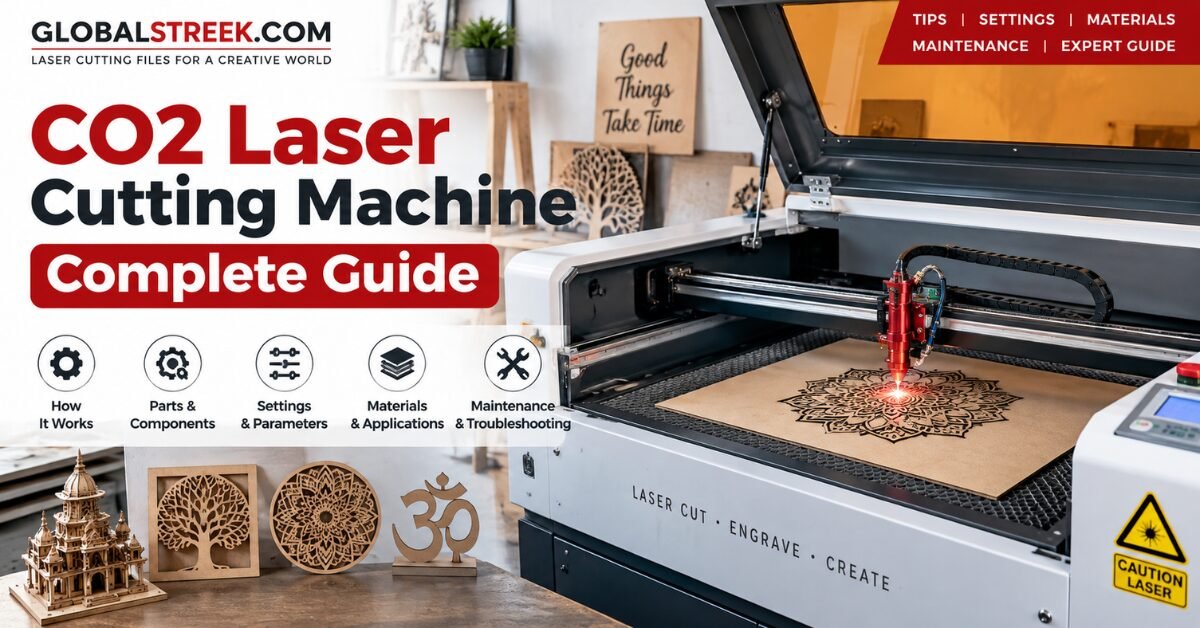
A CO2 laser cutting machine is one of the most popular tools for precision cutting and engraving. It has become an essential part of industries such as woodworking, sign making, handicrafts, acrylic fabrication, packaging, advertising, and personalized product manufacturing. Whether you own a small workshop or a large production unit, a CO2 laser machine can help improve accuracy, reduce material waste, and increase productivity.
Unlike traditional cutting methods, a CO2 laser machine uses a focused laser beam to cut or engrave materials without direct contact. This process produces clean edges, fine details, and consistent results that are difficult to achieve with manual tools.
This complete guide explains everything you need to know about CO2 laser cutting machines, including their working principle, components, applications, advantages, maintenance, safety, and tips for choosing the right machine.
What is a CO2 Laser Cutting Machine?
A CO2 laser cutting machine is a computer-controlled machine that uses a carbon dioxide laser beam to cut, engrave, or mark different materials. The laser beam is generated inside a sealed laser tube containing carbon dioxide gas, nitrogen, helium, and other gases.
The laser beam travels through mirrors and finally passes through a focusing lens. The lens concentrates the beam into a tiny point with extremely high energy. This focused energy melts, burns, or vaporizes the material, creating a smooth and accurate cut.
CO2 laser machines are widely used because they deliver excellent cutting quality on non-metal materials and require minimal finishing after cutting.
For a complete explanation, read our guide: What is a CO2 Laser Cutting Machine?
How Does a CO2 Laser Cutting Machine Work?
The working process is simple but highly precise.
First, the design is created using CAD or vector design software. The file is then sent to the laser machine through compatible software.
Once the job starts, the laser tube generates a high-energy beam. Mirrors guide the beam toward the laser head, where a focusing lens concentrates it into a very small spot.
As the laser head moves across the material, the concentrated heat cuts or engraves the surface. At the same time, compressed air from the air assist nozzle removes smoke, dust, and melted particles, keeping the cutting line clean.
The result is a precise cut with smooth edges and excellent detail.
For a complete explanation, read our guide: How Does a CO2 Laser Cutting Machine Work?
Main Components of a CO2 Laser Cutting Machine
A CO2 laser machine consists of several important parts that work together.
| Laser Tube | The laser tube generates the laser beam. Its power rating determines the machine’s cutting capability. |
| Power Supply | The laser power supply delivers the high voltage required to operate the laser tube safely and consistently. |
| Mirrors | Mirrors guide the laser beam from the tube to the laser head with minimal energy loss. |
| Focusing Lens | The focusing lens concentrates the laser beam into a fine point for accurate cutting and engraving. |
| Laser Head | The laser head holds the lens and directs the beam onto the material. |
| Motion System | Stepper motors or servo motors move the laser head along the X and Y axes with high precision. |
| Controller Board | The controller receives commands from the computer and controls the machine’s movements. |
| Water Cooling System | The cooling system keeps the laser tube at the recommended operating temperature, helping extend its lifespan. |
| Air Assist System | Air assist removes smoke and debris while reducing burn marks during cutting. |
| Exhaust System | The exhaust fan removes fumes and improves visibility inside the working area. |
For a complete explanation, read our guide: CO2 Laser Machine Parts Explained
Types of CO2 Laser Cutting Machines
Different industries require different machine sizes and power levels.
- Desktop CO2 Laser Machine
Compact machines designed for hobby users, schools, and small businesses.
- Standard Industrial CO2 Laser Machine
Suitable for commercial production, furniture manufacturing, sign making, and acrylic fabrication.
-
Large Format CO2 Laser Machine
Designed for cutting oversized sheets and handling high-volume production.
Materials That Can Be Cut
A CO2 laser cutting machine works well with many non-metal materials.
Common materials include:
- MDF
- Plywood
- Acrylic
- Wood
- Leather
- Paper
- Cardboard
- Rubber
- Fabric
- Bamboo
- Cork
- Foam
- Felt
- Veneer
- Some plastics that are laser-safe
Always confirm that a material is safe for laser processing before starting a job.
Materials That Should Not Be Cut
Some materials release hazardous gases or can damage the machine.
Avoid cutting:
- PVC
- Vinyl
- Chlorinated plastics
- Polycarbonate (for many laser applications)
- Fiberglass
- Unknown plastic materials
- Materials with toxic coatings
Using unsuitable materials can create health risks and reduce the life of the machine.
Common Applications of CO2 Laser Cutting Machines
CO2 laser machines are used across many industries.
Popular applications include:
- Wooden home decor
- MDF wall art
- Acrylic sign boards
- Personalized gifts
- Trophy manufacturing
- Name plates
- Keychains
- Educational models
- Decorative lamps
- Wedding decorations
- Packaging prototypes
- Leather products
- Craft items
- Architectural models
- Stencils
- Jewelry boxes
- Customized business products
Their ability to create intricate designs makes them suitable for both commercial production and creative projects.
Advantages of a CO2 Laser Cutting Machine
A CO2 laser machine offers several benefits.
- High cutting accuracy
- Smooth cutting edges
- Fast production speed
- Minimal material waste
- Easy design customization
- Contact-free cutting process
- Low finishing requirements
- Excellent engraving quality
- Suitable for complex patterns
- Supports batch production
These advantages help businesses improve productivity while maintaining consistent quality.
For a complete explanation, read our guide: Advantages of CO2 Laser Machines
Limitations of CO2 Laser Machines
Although highly versatile, CO2 laser machines also have some limitations.
- Limited performance on thick metals.
- Laser tubes require replacement after their service life.
- Regular maintenance is necessary.
- Cooling systems must work correctly.
- Mirrors and lenses require periodic cleaning.
- Some materials cannot be processed safely.
Understanding these limitations helps users operate the machine more efficiently.
For a complete explanation, read our guide: Disadvantages of CO2 Laser Machines
How to Choose the Right CO2 Laser Cutting Machine
Choosing the right machine depends on your work requirements.
Consider the following factors:
| Laser Power | Higher wattage allows faster cutting and supports thicker materials. |
| Working Area | Select a bed size that matches your typical material dimensions. |
| Cooling System | A reliable water cooling system improves laser tube life. |
| Software Compatibility | Ensure the machine supports commonly used design software and controller systems. |
| Build Quality | A rigid machine frame reduces vibration and improves cutting accuracy. |
| After-Sales Support | Choose a supplier who offers technical assistance, spare parts, and maintenance support. |
How to Choose the Right CO2 Laser Cutting Machine
Choosing the right machine depends on your work requirements.
Consider the following factors:
Maintenance Tips
Regular maintenance improves performance and extends machine life.
- Clean mirrors and lenses regularly.
- Replace cooling water as recommended.
- Check water circulation before every job.
- Inspect belts and guide rails.
- Lubricate moving parts when required.
- Clean the honeycomb or blade table.
- Remove dust from electrical components.
- Verify mirror alignment periodically.
A maintenance routine helps prevent unexpected downtime.
For a complete explanation, read our guide: Types of CO2 Laser Cutting Machines
Safety Precautions
Laser machines should always be operated responsibly.
- Wear suitable laser safety eyewear when required.
- Keep the workspace well ventilated.
- Never leave the machine unattended during cutting.
- Inspect the cooling system before starting.
- Keep a fire extinguisher nearby.
- Avoid processing unsafe materials.
- Follow the manufacturer’s operating instructions.
- Disconnect power before servicing electrical components.
Good safety practices protect both the operator and the equipment.
Common Problems and Solutions
Machine Does Not Fire
Check the power supply, emergency stop switch, laser enable settings, and wiring connections.
Weak Cutting Performance
Clean the lens, inspect mirror alignment, verify focus distance, and confirm the laser tube is working correctly.
Excessive Burn Marks
Increase air assist, reduce power if needed, or adjust cutting speed.
Incomplete Cuts
Check focus height, material thickness, laser power, and machine calibration.
Overheating
Inspect the water chiller, water flow, and operating temperature before continuing production.
Future of CO2 Laser Cutting Technology
Modern CO2 laser machines continue to improve with better motion systems, intelligent controllers, automatic focusing, cloud connectivity, and advanced software integration. These developments make production faster, reduce manual adjustments, and improve overall efficiency.
As digital manufacturing grows, CO2 laser machines will continue to play an important role in small businesses, workshops, educational institutions, and industrial production.
Conclusion
A CO2 laser cutting machine is a powerful tool for precision cutting and engraving across many industries. Its ability to produce clean cuts, detailed engravings, and repeatable results makes it a valuable investment for businesses of all sizes.
Choosing the right machine, maintaining it properly, and following safe operating practices will help you achieve reliable performance for years. Whether you manufacture custom products, decorative items, signage, or industrial components, a CO2 laser cutting machine offers the flexibility and accuracy needed for modern production.
Frequently Asked Questions (FAQs)
1. What is a CO2 laser cutting machine used for?
It is used for cutting and engraving materials such as wood, MDF, acrylic, leather, paper, fabric, rubber, and many other non-metal materials.
2. Can a CO2 laser cut metal?
Standard CO2 laser machines are mainly designed for non-metal materials. Some high-power industrial models can process thin metals with additional systems.
3. Which materials are unsafe for a CO2 laser machine?
PVC, vinyl, chlorinated plastics, fiberglass, and unknown plastics should not be processed because they can release hazardous fumes.
4. How long does a CO2 laser tube last?
The lifespan depends on the tube quality, operating hours, cooling efficiency, and maintenance. Proper care can significantly extend its service life.
5. Why is water cooling important?
Water cooling prevents the laser tube from overheating and helps maintain stable cutting performance.
6. What software is commonly used with CO2 laser machines?
Many machines support vector design software and dedicated laser control software, depending on the controller installed.
7. How often should mirrors and lenses be cleaned?
Inspect them regularly and clean them whenever dust, smoke residue, or reduced cutting performance is noticed.
8. Can beginners operate a CO2 laser cutting machine?
Yes. After learning the machine controls, safety procedures, and basic maintenance, beginners can safely perform simple cutting and engraving jobs.
9. Does laser cutting require finishing?
In many cases, CO2 laser cutting produces smooth edges that require little or no additional finishing.
10. Is a CO2 laser cutting machine suitable for small businesses?
Yes. Many small businesses use CO2 laser machines to manufacture customized products, signage, handicrafts, gifts, prototypes, and decorative items with consistent quality.